



Students spend a significant part of their day studying, reading, writing, attending online classes and working on laptops. A desk that is too high or too low can make it difficult to maintain a comfortable working position, particularly as students grow.
This is where an adjustable desk for students can be useful. Unlike a fixed-height study table, an adjustable desk allows the work surface to be raised or lowered to suit the student's body size and the task being performed.
But is it really worth buying one?
The answer depends on the student's age, height, study habits, available space and budget. Research on height-adjustable desks suggests they can reduce prolonged sitting and encourage changes between sitting and standing, although they should not be viewed as a replacement for regular movement or physical activity.
In this 2026 guide, we'll explain how adjustable desks work, their benefits for students, manual vs electric models, ideal desk height, important features and common buying mistakes so you can make an informed decision.
Why Students Need a Comfortable Study Setup
A study setup is more than just a desk and chair. The height of the desk, position of the laptop or monitor, chair support, lighting and available legroom can all influence how comfortably a student can work.
The Occupational Safety and Health Administration (OSHA) recommends arranging workstations so users can maintain relatively neutral positions, with relaxed shoulders, supported feet and wrists and forearms aligned during computer work. OSHA also emphasizes that there is no single workstation arrangement that fits everyone, which makes adjustability particularly useful.
For growing students, a fixed-height desk can become less suitable over time. An adjustable study desk can accommodate changes in height and allow the same desk to be used for different activities.
A good student study setup should provide:
- Adequate desk height and legroom
- Enough surface area for books and a laptop
- A comfortable, supportive chair
- Proper screen positioning
- Good lighting
- Space to change sitting positions
- Easy access to frequently used items
An ergonomic setup isn't about forcing a student to sit perfectly still. In fact, OSHA recommends changing working positions regularly and taking opportunities to stand and move.
What Is an Adjustable Desk?
An adjustable desk is a desk whose height can be changed according to the user's requirements.
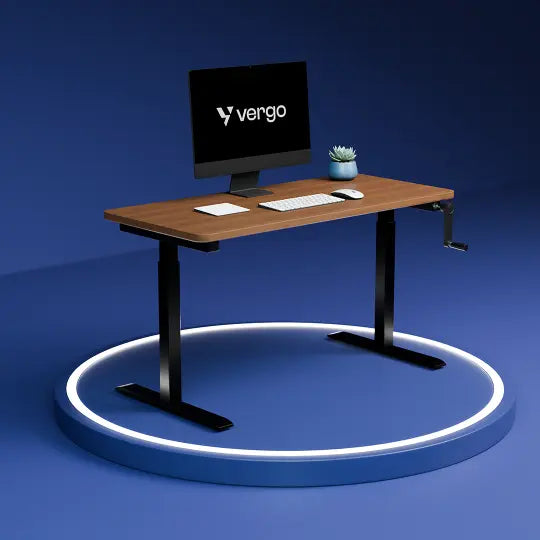
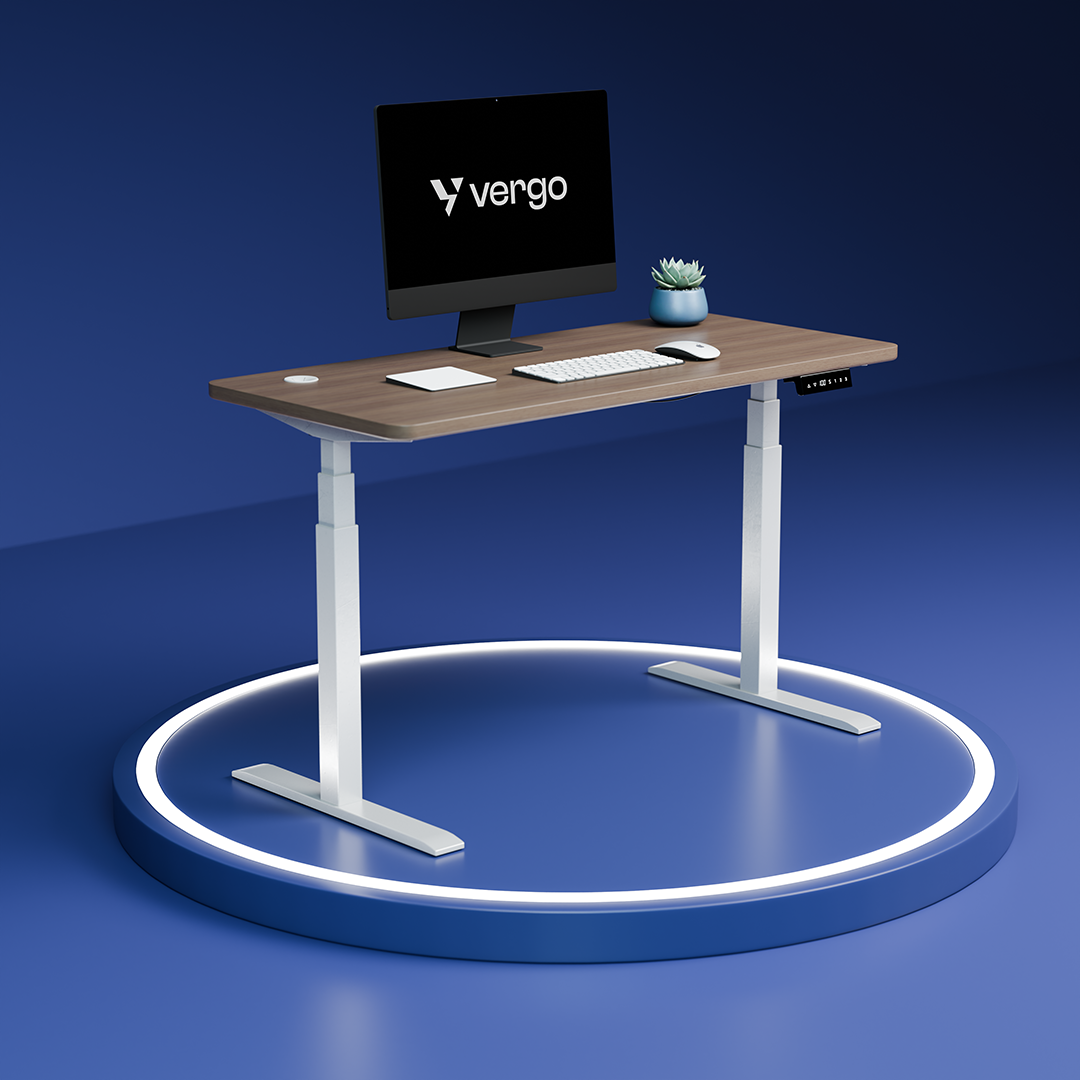
Depending on the model, the height may be adjusted manually using a hand crank, lever or locking mechanism, or electronically using a motor and control panel.
For students, an adjustable desk can serve as:
- A traditional sitting study desk
- A laptop or computer workstation
- A reading and writing table
- A standing study station
- A shared desk for users of different heights
The key advantage is flexibility.
Instead of choosing one fixed desk height and adapting the student's body to it, the desk can be adjusted to better fit the student.
OSHA's workstation guidance specifically notes that height-adjustable desks can accommodate a wider range of users and support regular changes in working posture.
Benefits of Adjustable Desks for Students
1. Supports a More Flexible Study Posture - One of the biggest benefits of a height-adjustable study desk is that it allows students to change their working position. A student can sit while writing an assignment and later raise the desk for reading or computer work.
This flexibility can help avoid spending an entire study session in exactly the same position.
Importantly, adjustability doesn't automatically guarantee good posture. The desk still needs to be set correctly alongside a suitable chair and screen position.
2. Helps Reduce Prolonged Sitting - Research has investigated whether height-adjustable desks can reduce the amount of time students spend sitting.
In a study involving 43 adolescents, students using height-adjustable desks spent 25% less time sitting and 24% more time standing compared with traditional classroom desks. However, some students reported discomfort or difficulty concentrating while standing, showing why students should be able to alternate rather than stand continuously.
Another study involving 55 adolescents found that height-adjustable desks combined with prompts to break up sitting reduced sitting time by approximately 6.7–9.7 minutes per lesson, while increasing standing time and the number of breaks from sitting.
What does this mean?
The goal isn't to make students stand all day. The real advantage is giving them the option to change positions.
3. Useful for Growing Students - Children and teenagers can change considerably in height during their school years. A fixed study table may fit well initially but become uncomfortable as the student grows.
An adjustable desk can potentially remain useful for longer because its height can be modified as the student grows. This can make an adjustable student desk a practical long-term investment, particularly when more than one family member may use the workstation.
4. Can Support a Better Computer Setup - Students increasingly use laptops and computers for homework, online learning, research and projects.
A desk that can be adjusted helps position the work surface according to the student's sitting or standing position. For laptop users, however, desk height alone isn't enough. A laptop screen and keyboard are connected, so raising the laptop to improve screen height can also raise the keyboard.
For longer computer sessions, an external keyboard and mouse can make it easier to position the screen and input devices separately. OSHA specifically recommends an external keyboard and input device for prolonged laptop work.
5. Can Accommodate Different Study Activities - Students don't perform the same task all day. They may switch between:
- Writing
- Reading
- Drawing
- Typing
- Online classes
- Research
- Gaming or recreational computer use
An adjustable desk can be repositioned depending on the activity and the student's preferred working posture.
6. Can Be Shared Between Users - If siblings or family members of different heights share a study area, a fixed desk may force one person to compromise.
A height-adjustable desk allows each user to set the work surface according to their body dimensions. This can make it more versatile than buying separate fixed-height desks.
Features to Look For in an Adjustable Desk for Students
Don't choose an adjustable desk based on height range alone. Look at the entire workstation.
1. Wide Height Adjustment Range - The desk should have enough adjustment range to accommodate the student's current height and potential growth. If the desk is intended for shared use, prioritize a wider adjustment range.
2. Stable Frame - Stability is particularly important when students write, draw or use a laptop. Check whether the desk remains stable at both its lowest and highest settings.
3. Easy Height Adjustment - If adjusting the desk requires significant effort, students may simply leave it at one height. An easy-to-use mechanism encourages practical use.
4. Appropriate Desktop Size - The desk should have enough space for the student's actual study materials. Consider whether they need room for:
- Laptop or monitor
- Books
- Notebook
- Keyboard and mouse
- Stationery
- Desk lamp
 OSHA recommends ensuring sufficient work-surface space for the monitor, keyboard and pointing device while keeping frequently used items within easy reach.
5. Adequate Legroom - Don't overlook the space underneath the desk. A desk may have an excellent tabletop but still be uncomfortable if drawers, supports or other components restrict the student's legs.
OSHA recommends adequate under-desk clearance so users can change positions without unnecessary restriction.
6. Cable Management - For students using laptops, monitors, chargers and other devices, cable management can make the desk safer and easier to use. Look for integrated cable trays, clips or suitable cable-routing options.
7. Rounded or Comfortable Edges - Students may rest their arms against the desk while writing or typing. OSHA recommends avoiding sharp leading edges where the arms or wrists contact the work surface.
Ideal Desk Height for Students
There is no single ideal desk height that works for every student. The correct height depends on the student's height, chair height, body proportions and task. This is one of the strongest reasons to consider an adjustable desk for students.
When sitting - A useful starting point is to adjust the desk so:
- Shoulders remain relaxed
- Elbows stay close to the body
- Forearms are approximately level with the work surface
- Wrists remain relatively straight
- Feet are supported
- Knees aren't obstructed by the desk
OSHA recommends elbows remaining close to the body and bent roughly 90–120 degrees in a neutral computer-workstation position.
When standing - When the student stands, the work surface should again be adjusted around elbow height so that the shoulders remain relaxed and the wrists stay in a neutral position. The important point is to adjust the desk to the student—not force the student to fit the desk.
Common Mistakes When Buying a Student Desk
1. Choosing Based Only on Price - The cheapest desk isn't necessarily the best value.
A desk that cannot adjust sufficiently or becomes unstable at higher settings may end up being replaced sooner.
Consider height range, stability, desktop size, adjustment mechanism and build quality together.
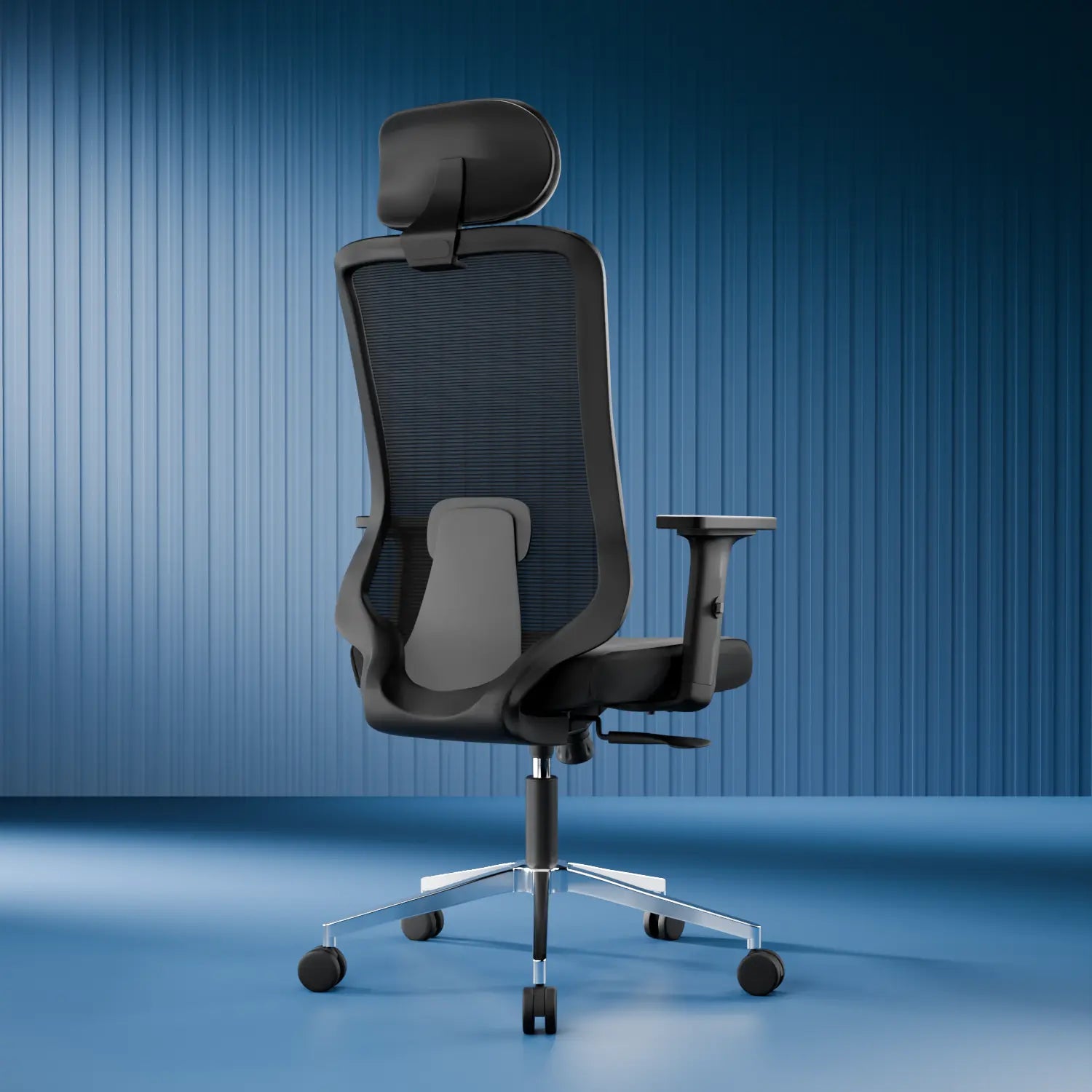
2. Ignoring the Chair - An adjustable desk works best when paired with an appropriately sized and adjustable chair. The desk cannot compensate for a chair that doesn't support the student properly. The complete setup should be considered as a desk-and-chair system.
3. Buying a Desk That's Too Small - A small desktop may look space-efficient but quickly become cluttered once books, notebooks and a laptop are added. OSHA notes that insufficient work-surface space can force users to position equipment poorly and adopt awkward postures
4. Treating Standing as the Goal - A sit-stand desk isn't designed to make students stand continuously. Research has found that some adolescents experienced leg or back discomfort while standing and some reported difficulty concentrating or distraction.
The better approach is to alternate between sitting, standing and moving.
5. Ignoring Screen Height - A desk can be perfectly adjusted while the laptop screen is still too low. OSHA recommends positioning the monitor so that the head and neck can remain balanced rather than repeatedly tilting forward or backward. For longer laptop sessions, consider a laptop stand with an external keyboard and mouse.
6. Forgetting Future Growth - If you're buying an adjustable desk for a younger student, consider how long the height range will remain useful. A larger adjustment range can potentially make the desk useful through multiple stages of growth.
Is an Adjustable Desk Really Worth Buying for Students?
For many students, yes but it depends on how the desk will be used. The strongest argument for an adjustable student desk isn't that it magically improves studying. Instead, it's the flexibility it provides.
Research in school and university settings indicates that height-adjustable or sit-stand desks can increase standing and reduce prolonged sitting. For example, a study of 304 university students found that students stood an average of 7.2 minutes per hour with access to sit-stand desks compared with 0.7 minutes per hour with traditional seated desks.
However, research is still developing, and evidence for long-term academic or health outcomes is not definitive. Some studies have found promising changes in sitting patterns, while others emphasize the need for larger and longer trials.
So, think of an adjustable desk as a tool for creating a flexible study environment, not a substitute for exercise, breaks or good ergonomics.
Final Thoughts
An adjustable desk for students can be a worthwhile investment when comfort, flexibility and long-term usability are priorities. The biggest advantage isn't simply the ability to stand. It is the ability to adjust the workstation to the student and change working positions throughout the day.
Research involving school-age and university students provides encouraging evidence that height-adjustable desks can reduce prolonged sitting and increase opportunities to stand. However, the evidence does not justify treating an adjustable desk as a standalone solution for posture, health or academic performance.
For the best results, combine an adjustable desk with:
- A properly sized ergonomic chair
- Correct desk height
- Suitable screen positioning
- Adequate legroom
- Good lighting
- Regular movement and study breaks
In short: if your student spends several hours each day studying, is growing rapidly, uses a computer regularly or shares a workstation, an adjustable desk can offer meaningful flexibility and long-term value.
Create a More Flexible Study Setup
Give students a study workspace that can adapt to their height, activities and changing needs.
Explore ergonomic and height-adjustable desk solutions from Vergo and create a more comfortable, flexible workspace for study, learning and everyday use.
FAQ -
1. Is an adjustable desk good for students?
Yes. An adjustable desk can allow students to customize their work surface as they grow and alternate between sitting and standing. Research suggests height-adjustable desks can reduce prolonged classroom sitting, although they are not a replacement for regular movement.
2.What is the best desk height for a student?
There is no universal height because students vary in height and body proportions. Adjust the desk so the student's shoulders are relaxed, elbows remain close to the body and wrists can stay relatively straight.
3.Do adjustable desks improve posture?
They can make it easier to create a workstation that fits the user, but an adjustable desk does not automatically create good posture. Chair height, screen position, keyboard placement and regular movement also matter.
4.Is an adjustable desk worth it for a home study room?
It can be particularly useful when the student spends many hours studying, uses a computer frequently, is still growing or shares the desk with another person.
5.Should I buy an adjustable desk or a traditional study table?
A traditional desk can be sufficient if its height fits the student well. An adjustable desk is worth considering when you want greater flexibility, accommodate growth or allow multiple users to share the same workstation.