


Choosing the right office table is about much more than finding a surface for your laptop. The desk you use every day influences how comfortably you work, how organised your workspace feels, and how easily you can adapt to changing work habits.
As workplaces continue to evolve, many professionals are moving beyond traditional fixed office tables and exploring manual height adjustable tables that offer greater flexibility. Instead of working at a single desk height throughout the day, these desks allow you to adjust the tabletop to suit different tasks, seating preferences, or users. At the same time, fixed office tables remain a popular choice because of their simplicity, stability, and affordability. But is a traditional desk still the right option for today's workspaces?
According to research published in the British Journal of Sports Medicine, reducing prolonged periods of uninterrupted sitting and incorporating more movement into the workday may contribute to better workplace comfort and overall well-being. While changing your desk alone isn't a complete solution, having a workspace that allows greater flexibility can encourage healthier work habits over time.
In this guide, we'll compare manual adjustable tables vs fixed office tables, explore their advantages, highlight key differences, and help you determine which option best suits your workspace and daily routine.
Why Your Office Table Matters More Than You Think
Most people spend considerable time selecting an office chair but often overlook the importance of the desk itself. However, your office table plays an equally important role in creating a comfortable and productive workspace.
A well-designed office table provides adequate workspace for your daily tasks, supports better organisation, and allows you to position your monitor, keyboard, and accessories more comfortably. The right desk should also complement your work style, whether you're attending virtual meetings, working with multiple monitors, studying, or collaborating with colleagues.
As workspaces become more dynamic, flexibility has become an important consideration. Some users prefer a traditional fixed desk that remains stable and simple, while others appreciate the adaptability of a manual height adjustable table that can be adjusted as work requirements change.
Rather than asking which table is universally "better," the more important question is: Which office table best supports the way you work every day?
What Is a Manual Adjustable Table?
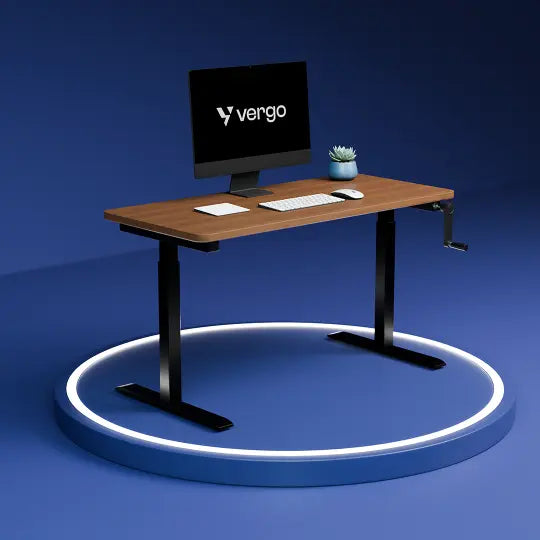
A manual height adjustable table is an office desk that allows you to manually adjust the height of the tabletop using a hand crank or mechanical adjustment system. Unlike electric height adjustable desks, manual models do not require electricity, making them a practical and cost-effective option for homes, offices, educational institutions, and shared workspaces.
The ability to change the desk height makes it easier to customise your workspace based on your preferred working position, different chair heights, or multiple users sharing the same desk.
Key Features of a Manual Adjustable Table
- Adjustable desk height using a manual crank mechanism
- No electricity or power connection required
- Stable steel frame construction
- Durable tabletop for everyday use
- Suitable for sitting or elevated working positions
- Easy to maintain with fewer electronic components
- Ideal for both home and office environments
One of the biggest advantages of a manual adjustable table is its flexibility. Instead of being restricted to a fixed height, users can adjust the desk whenever required, creating a workspace that adapts to different tasks and individual preferences.
Manual adjustable tables are also appreciated for their simple mechanical design, lower maintenance requirements, and long-term durability. Since they operate without motors or electrical components, they offer a reliable solution for users seeking adjustable functionality at a more accessible price point.
What Is a Fixed Office Table?
A fixed office table is a traditional desk with a permanently set height that cannot be adjusted after installation. It remains one of the most common choices for offices, study rooms, schools, and home workspaces because of its straightforward design and ease of use.
Fixed office tables are available in a wide range of sizes, materials, and styles, making them suitable for different interiors and budgets. Once assembled, they provide a stable and consistent work surface for everyday tasks such as studying, writing, computer work, and meetings.
Key Features of a Fixed Office Table
- Fixed desk height
- Strong and stable construction
- Available in various sizes and finishes
- Minimal assembly and maintenance
- Suitable for single-user workstations
- Often includes drawers or storage options
 Benefits of a Fixed Office Table
Fixed office tables are valued for their simplicity and affordability. They require no adjustments during use, making them an ideal option for dedicated workstations where the same person uses the desk daily.
Their straightforward construction also means fewer moving parts, contributing to dependable stability and minimal maintenance over time.
Manual Adjustable Table vs Fixed Office Table: Understanding the Difference
At first glance, both desks may appear to serve the same purpose—they provide a work surface for your daily tasks. However, the way they support different work styles can vary significantly.
A manual adjustable table is designed for flexibility. It allows you to modify the desk height manually, making it easier to adapt the workspace for different users, chair heights, or work preferences. This versatility makes it a practical choice for dynamic environments where comfort and adaptability are priorities.
A fixed office table, on the other hand, maintains a single height throughout its lifespan. Its simple design, sturdy construction, and ease of use make it a dependable option for traditional office setups and dedicated workstations.
Ultimately, the right choice depends on your workspace, how you use your desk each day, and whether adjustability is a feature you'll benefit from in the long term.
Expert Insight: Interior designers and workplace ergonomics specialists increasingly recommend choosing office furniture that can adapt to changing work environments rather than focusing solely on aesthetics. As hybrid work and multifunctional spaces become more common, flexible furniture solutions continue to gain popularity among both homeowners and businesses.
Manual Adjustable Table vs Fixed Office Table: Key Differences
Choosing between a manual adjustable table and a fixed office table isn't about deciding which one is universally better and it's about selecting the desk that best supports your daily work routine, workspace, and long-term requirements.
Here's a detailed comparison to help you make an informed decision.
|
Feature |
Manual Adjustable Table |
Fixed Office Table |
|
Height Adjustment |
✔ Manually adjustable to different heights |
✘ Fixed height |
|
Flexibility |
Excellent for different users and work setups |
Suitable for one consistent setup |
|
Sitting & Elevated Working |
Supports both |
Sitting only |
|
Maintenance |
Low maintenance with mechanical components |
Minimal maintenance |
|
Power Requirement |
No electricity required |
No electricity required |
|
Stability |
Highly stable with quality frame construction |
Very stable |
|
Workspace Adaptability |
Easily adapts to changing needs |
Limited flexibility |
|
Best For |
Home offices, professionals, students, shared workspaces |
Dedicated office setups, study rooms, reception areas |
|
Initial Investment |
Slightly higher |
More budget-friendly |
Quick Insight: If flexibility is your priority, a manual adjustable table offers greater adaptability. If your workspace remains unchanged and you prefer a simple setup, a fixed office table continues to be a reliable option.
Benefits of a Manual Adjustable Table
A manual height adjustable table is designed for users who value flexibility without the additional cost of an electric standing desk. It allows you to adjust the desk height whenever required, making it suitable for different work environments and changing daily routines.
1. Adapts to Different Users - Not everyone prefers the same desk height. A manual adjustable table can be repositioned to suit different users, making it an excellent option for shared workspaces, family study areas, or collaborative offices.
2. Greater Workspace Flexibility - Your workday often involves different activities—from typing and writing to attending meetings or reviewing documents. Being able to adjust the desk height allows you to create a workspace that feels comfortable for different tasks and seating arrangements.
3. No Electricity Required - Unlike electric height adjustable desks, manual adjustable tables operate using a simple mechanical crank system. This eliminates the need for power outlets while reducing maintenance associated with electrical components.
4. Cost-Effective Alternative - Manual adjustable tables offer many of the advantages of height-adjustable workstations while remaining more affordable than electric models. For many users, they provide an excellent balance between functionality and value.
5. Durable Mechanical Construction - With fewer electronic parts, manual adjustable tables are known for their dependable operation and long-term durability. A quality steel frame and reliable adjustment mechanism contribute to years of everyday use.
6. Supports a Dynamic Workspace - Modern workspaces continue to evolve. A manual adjustable table allows your desk to adapt as your workspace changes, whether you're upgrading your chair, changing monitor setups, or sharing the desk with another family member or colleague.
Benefits of a Fixed Office Table
Despite the growing popularity of adjustable desks, fixed office tables continue to be widely used across homes, schools, and offices due to their simplicity and dependable design.
1. Simple and Easy to Use - A fixed office table requires no adjustments before use. Simply assemble it, organise your workspace, and it's ready for everyday tasks.
2. Excellent Stability - Since the desk height never changes, fixed office tables often provide excellent stability, making them suitable for writing, studying, and general office work.
3. Budget-Friendly - For users who don't require height adjustability, a fixed office table is often the more economical choice.
4. Available in Many Designs - Fixed office tables come in a wide range of styles, materials, colours, and storage configurations, allowing users to choose a desk that complements their workspace and interior décor.
5. Ideal for Dedicated Workstations - If only one person uses the desk and the workspace rarely changes, a fixed office table offers a straightforward and practical solution.
Which Office Table Is Best for Different Users?
The best office table depends on your daily routine rather than simply its features.
|
User |
Recommended Table |
Why? |
|
Students |
Manual Adjustable Table |
Easily adapts as study needs change and can accommodate different seating arrangements. |
|
Work From Home Professionals |
Manual Adjustable Table |
Offers greater flexibility for evolving home office setups. |
|
Corporate Offices |
Manual Adjustable Table |
Suitable for shared workstations and adaptable office environments. |
|
Dedicated Office Users |
Fixed Office Table |
Ideal when one person consistently uses the same workstation. |
|
Reception Areas |
Fixed Office Table |
Practical for fixed layouts with consistent usage. |
|
Libraries & Study Rooms |
Fixed Office Table |
Stable, simple, and suitable for focused work. |
Research Insight: Why Flexible Workspaces Are Becoming More Popular
The way people work has changed significantly over the past few years. Hybrid working models, home offices, and collaborative workspaces have increased demand for furniture that can adapt to different users and changing environments.
Research from workplace ergonomics and office design studies suggests that adjustable furniture provides greater flexibility in shared workspaces by allowing users to personalise their workstation more easily. Rather than being limited to a single desk height, adjustable tables help accommodate different body types, chair heights, and workspace preferences.
While no single desk guarantees improved health or productivity, choosing furniture that can adapt to changing work requirements often creates a more versatile and future-ready workspace.
Common Mistakes to Avoid When Choosing an Office Table
Selecting the right office table involves more than comparing prices. Avoid these common mistakes before making your purchase.
❌ Buying Based Only on Price - The lowest-priced desk may not always provide the functionality or durability you need. Consider long-term value rather than just the initial cost.
❌ Ignoring Future Workspace Needs -Think about how your workspace may evolve. If your work setup changes frequently or the desk will be shared, flexibility becomes increasingly valuable.
❌ Choosing the Wrong Desk Size - Always measure your available space before purchasing. A desk should provide enough workspace without making the room feel crowded.
❌ Overlooking Build Quality - Look for features such as:
- Powder-coated steel frame
- Scratch-resistant tabletop
- Smooth adjustment mechanism
- Stable base
- Good weight capacity
- Reliable warranty
These factors contribute to the desk's long-term performance.
❌ Forgetting Compatibility - Your office table should work well with your office chair, monitor setup, storage solutions, and available workspace.
Pro Tip: Instead of asking, "Which desk is more popular?" ask yourself, "Which desk will support the way I work for the next five years?" Choosing a table based on your daily routine and future needs is often the smarter long-term investment.
Final Thoughts
An office table is one of the most frequently used pieces of furniture in any workspace, so choosing the right one is an investment that can influence your comfort, organisation, and productivity for years to come.
A fixed office table remains a dependable option for users who prefer a simple, dedicated workstation with minimal adjustments. On the other hand, a manual adjustable table offers greater flexibility, allowing your workspace to adapt as your work style, seating preferences, or office setup changes over time. Rather than choosing a desk based only on price or appearance, consider how you'll use it every day. Factors such as workspace flexibility, build quality, durability, and future requirements can help you select a table that continues to meet your needs as your workspace evolves.
If you're looking for a desk that combines practicality with long-term adaptability, a manual height adjustable table can be a smart investment for modern workspaces, home offices, and study areas.
Find the Right Office Table for Your Workspace
Your office table should do more than hold your laptop—it should support the way you work every day.
Whether you're creating a productive home office, upgrading your study space, or furnishing a professional workspace, choosing a desk that matches your needs today—and can adapt to your needs tomorrow—makes all the difference.
Explore Vergo's Manual Height Adjustable Tables, designed with sturdy steel frames, smooth manual height adjustment, durable tabletops, and modern aesthetics to help you create a flexible and comfortable workspace.
FAQ
1. What is the difference between a manual adjustable table and a fixed office table?
A manual adjustable table allows you to adjust the desk height using a hand crank or mechanical system, offering greater flexibility for different users and work preferences. A fixed office table has a permanent height and is designed for a consistent workstation setup.
2. Is a manual adjustable table worth buying?
If you want a workspace that can adapt to different tasks, users, or seating preferences, a manual adjustable table is a worthwhile investment. It offers the flexibility of height adjustment without the higher cost or maintenance of an electric standing desk.
3. Do manual adjustable tables require electricity?
No. Manual adjustable tables operate using a mechanical crank or adjustment mechanism and do not require electricity, making them easy to use in any workspace.
4. Are manual adjustable tables durable?
Yes. A well-built manual adjustable table with a sturdy steel frame and quality adjustment mechanism is designed for long-term everyday use while requiring minimal maintenance.
5.Which office table is better for working from home?
A manual adjustable table is often a great choice for home offices because it can adapt to changing work setups and different chair heights. A fixed office table works well if your workspace remains the same and you don't require height adjustment.