


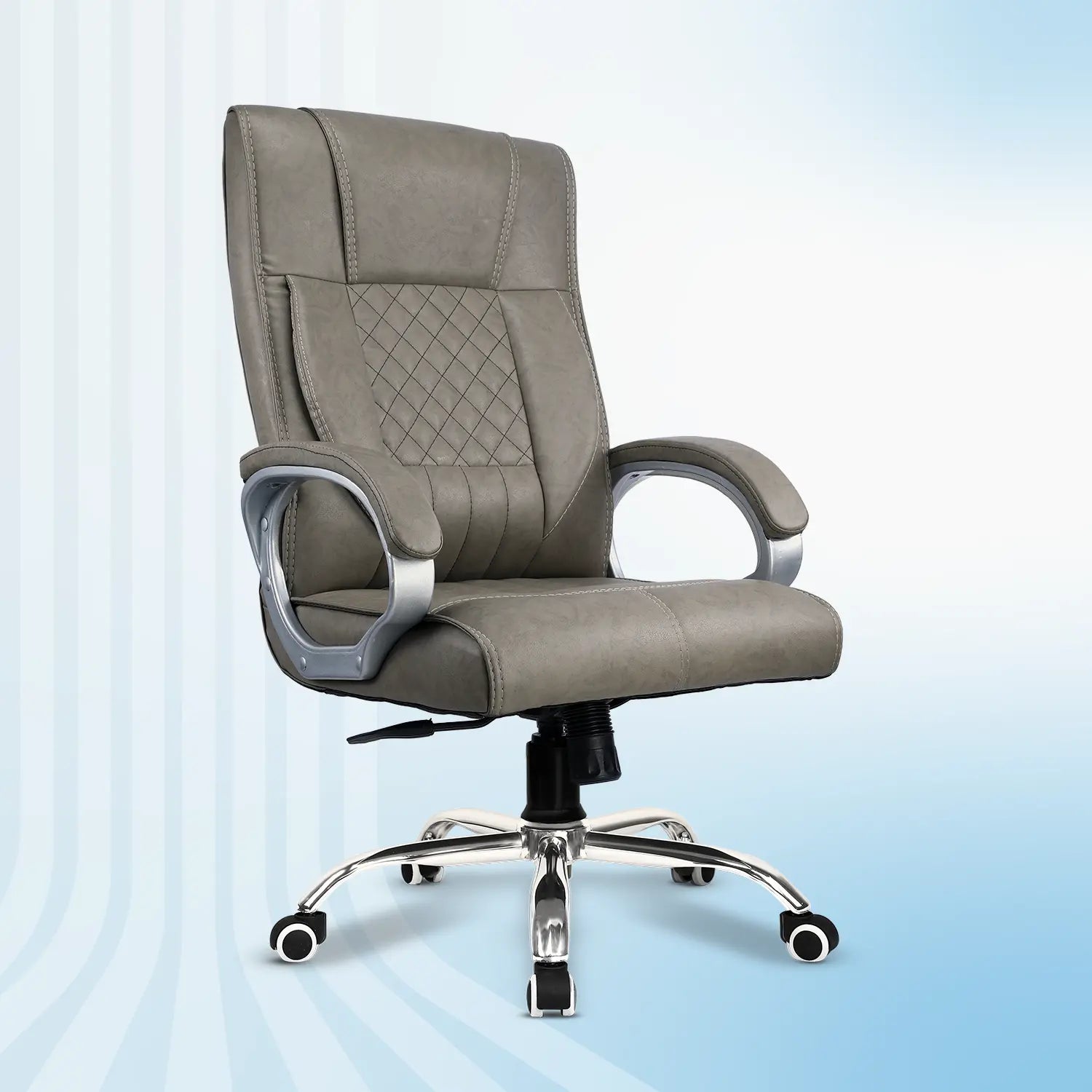
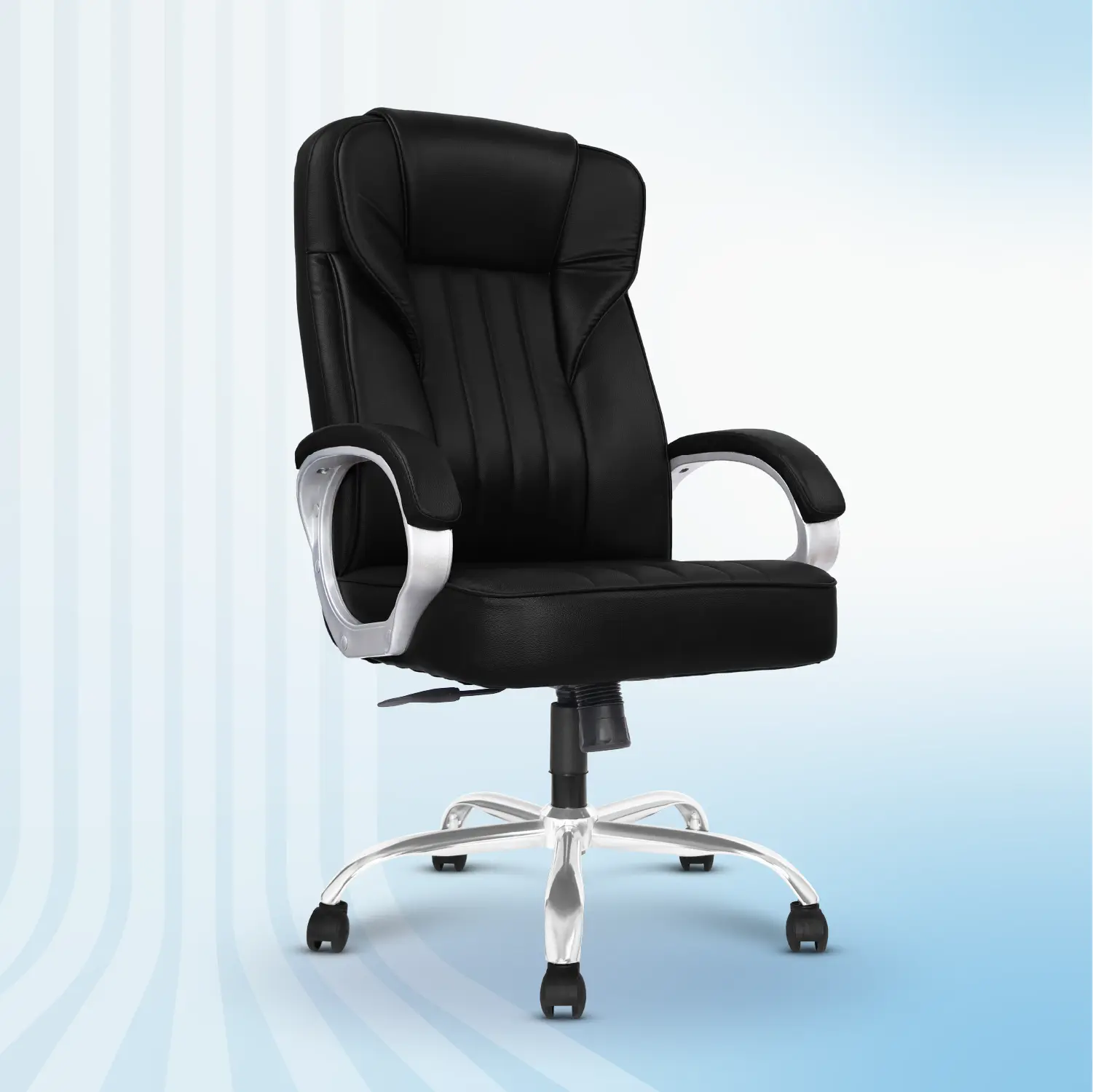

An office chair does more than provide a place to sit. Its mechanism controls how the seat and backrest move, recline, tilt and lock, directly affecting how you interact with the chair throughout the workday.
One of the most useful features is the office chair recline mechanism. It allows the backrest to move away from its upright position so you can change your sitting position instead of remaining fixed in one posture. But how does an office chair recline actually work? What is the difference between recline, tilt and synchro mechanisms? And what should you look for when choosing an office chair with a reclining mechanism?
In this guide, we'll explain the mechanics behind office chair reclining systems, the different types available, how to adjust them and what research says about reclined sitting.
What Is an Office Chair Recline Mechanism?
An office chair recline mechanism is the mechanical system underneath the seat that controls the movement of the chair's backrest and, depending on the design, the seat itself. When you activate the recline lever, the mechanism allows the backrest to move backward from its upright position. Depending on the chair, you may be able to:
-
Recline the backrest
-
Lock the backrest at a particular angle
-
Allow the backrest to move freely
-
Adjust the resistance required to recline
-
Tilt the seat and backrest together
-
Coordinate seat and backrest movement
This is why the mechanism is sometimes referred to as an office chair tilt mechanism, recline mechanism or chair control mechanism. The exact movement depends on the chair's design.
OSHA recommends office chairs with adjustable backrests that provide lumbar support and allow users to recline from the vertical position. Its workstation guidance specifically notes that a backrest should be able to recline at least 15 degrees and either lock or provide adjustable resistance to movement.
How Does an Office Chair Recline Mechanism Work?
The basic principle is relatively simple.
Step 1: You activate the control - Most office chairs have a lever or control located underneath the seat. Depending on the mechanism, moving the lever may:
-
Unlock the backrest
-
Release the tilt function
-
Lock the chair at a selected position
-
Control seat height separately
Step 2: The backrest moves - Once unlocked, your body weight provides the force that moves the backrest backward. The mechanism controls this movement rather than allowing the backrest to fall backward freely.
Step 3: Recline tension controls resistance - Many chairs include a recline tension adjustment. This allows you to change how much force is required to lean back.
If the tension is too loose, the chair may feel as though it reclines too easily. If it is too tight, you may have to push harder against the backrest.
Step 4: The mechanism returns or holds the chair - Depending on the design, the chair may:
-
Return toward an upright position
-
Stay in a free-floating movement
-
Lock at a specific angle
-
Coordinate movement between the seat and backrest
This is where different office chair mechanisms begin to behave differently.
Recline vs Tilt: What's the Difference?
These terms are often used interchangeably, but they don't always describe exactly the same movement.
A) Recline - Recline generally refers to the backrest moving backward from the upright position. The seat may remain relatively fixed depending on the mechanism.
B) Tilt - Tilt generally refers to the chair's seat and/or backrest rotating backward as part of a larger movement.
For example, with a center-tilt mechanism, the seat and backrest may move backward together around a pivot point.
C) Synchro Tilt - A synchro mechanism coordinates the movement of the seat and backrest at different rates. This can allow the backrest to recline while the seat angle changes simultaneously.
Research examining office chair mechanics has found that the relationship between seat and backrest movement can influence lumbar spine posture. One biomechanical analysis reported differences in lumbar curvature depending on how the seat and backrest moved together during recline.
In simple terms:
Recline = mainly backrest movement.
Tilt = coordinated movement of the chair/seat and backrest, depending on the mechanism.
The terminology can vary between manufacturers, so it's important to look at the actual movement rather than the name alone.
Types of Office Chair Recline Mechanisms
Not every office chair reclines in the same way. Understanding the main mechanism types can make it easier to compare chairs.
1. Locking Recline Mechanism - A locking recline mechanism allows the backrest to recline and then lock at one or more positions. This is useful when you prefer a fixed position rather than continuous movement.
For example, a chair might allow you to: Sit upright → recline → lock → work or relax
The exact number of locking positions varies between chairs.
Best suited for:
-
People who prefer controlled positioning
-
Office work
-
Users who frequently switch between upright and reclined positions
2. Free-Float Recline Mechanism - A free-float mechanism allows the backrest to move with your body instead of remaining locked at one position.
This creates a more dynamic sitting experience.
However, the resistance should still be adjusted appropriately. A chair that moves too easily may feel unstable, while excessive tension can make reclining uncomfortable.
3. Center-Tilt Mechanism - With a center-tilt mechanism, the chair typically pivots around a point underneath the seat. The seat and backrest may tilt backward together.
This is one of the simpler office chair mechanisms and is commonly found in task and executive chairs.
4. Knee-Tilt Mechanism - A knee-tilt mechanism changes the pivot position so the chair tilts from a point closer to the front of the seat. This can create a different feeling during recline compared with a center-tilt mechanism.
The terminology and exact movement can vary between manufacturers, so buyers should check the mechanism specifications rather than relying only on the name.
5. Synchro Tilt Mechanism - A synchro tilt mechanism coordinates the movement of the seat and backrest. For example, the backrest may move backward through a larger angle while the seat tilts through a smaller angle. This can help the chair maintain contact and support as you change positions.
A biomechanical study of office chairs found that different synchronized seat/backrest movements produced different effects on lumbar spine curvature, highlighting why the relationship between seat and backrest movement matters.
6. Multi-Function Mechanism - A multi-function office chair mechanism usually provides several independent adjustments.
Depending on the chair, these may include:
-
Backrest recline
-
Recline lock
-
Seat tilt
-
Seat slide
-
Tilt tension
-
Seat angle adjustment
The exact features vary by chair manufacturer. For users who want more control over their sitting position, a multi-function mechanism can provide greater adjustability.
Why Is Reclining Important in an Office Chair?
One reason recline mechanisms are useful is that they allow you to change your sitting position throughout the day. Research on office seating suggests that maintaining one fixed posture is not necessarily the goal. A study using MRI to examine spinal posture in upright and reclined office-chair positions found that changing chair posture produced measurable changes in spinal curvature, with considerable variation between individuals.
Another biomechanical study found that a lack of seat-back mobility forced participants to maintain a more upright posture with greater extensor muscle forces and spinal compression during certain tasks. The researchers suggested that office chairs should allow reclined postures to help off-load the spine, while cautioning against excessive recline that can alter lumbar posture.
This doesn't mean that reclining automatically prevents back pain. The evidence around office-chair interventions and musculoskeletal outcomes remains mixed. A systematic review of chair interventions among office workers found low- to very-low-quality evidence and conflicting results for pain, discomfort and muscle activation.
So the practical takeaway is :- A good recline mechanism gives you more options for changing position; it isn't a substitute for good workstation setup or regular movement.
What Is Recline Tension?
Recline tension determines how much resistance you feel when leaning backward. Think of it as the mechanism's resistance setting.
Too little tension : The chair may recline too easily, making you feel as though you are falling backward.
Too much tension : You may need excessive force to recline, making the feature difficult to use.
Correct tension : The backrest should move smoothly when you intentionally lean back while still providing adequate support.
 A useful starting point is to adjust the tension based on your body weight and preferred sitting style, then make small adjustments until the chair moves comfortably.
How to Adjust an Office Chair Recline Mechanism
Although controls vary between models, the general process is:
1. Sit normally - Place your feet comfortably on the floor and sit against the backrest.
2. Find the recline control - Look underneath the seat for the lever or control responsible for tilt/recline.
3. Unlock the mechanism - If your chair has a locking function, release it before attempting to recline.
4. Lean back gradually - Allow the backrest to move naturally rather than pushing aggressively.
5. Adjust the tension - Use the tension knob or control to increase or decrease resistance.
6. Lock when needed - If you prefer a fixed working position, engage the recline lock.
7. Check your workstation - When you recline, make sure your monitor, keyboard and desk remain appropriately positioned.
This matters because chair adjustment should be considered together with the rest of the workstation. OSHA recommends adjusting the chair alongside the monitor, keyboard and desk rather than treating the chair as an isolated component.
What Recline Angle Is Best for an Office Chair?
There isn't one recline angle that is ideal for every person or every task. For normal computer work, you may prefer a relatively upright position that keeps your monitor and keyboard easy to reach. For reading, meetings or taking a short break, a more reclined position may feel more comfortable.
OSHA's workstation guidance recommends that a backrest allow at least 15 degrees of recline from vertical, with the ability to lock or adjust resistance. It also notes that if a backrest reclines more than about 30 degrees from vertical, a headrest should be provided.
The important point is not to chase a specific number simply because it appears in a product description. Chair fit, task, body dimensions and workstation setup all matter.
Benefits of an Adjustable Office Chair Recline Mechanism
A well-designed recline mechanism can provide several practical benefits.
1. Position Changes : It allows you to move between upright and reclined positions rather than staying completely static.
2. Adjustable Back Support : A reclining backrest can continue supporting your back as your position changes.
3. Greater Seating Adjustability : More adjustment options can help accommodate different body sizes and working preferences.
4. Breaks From a Fixed Upright Position : Reclining can provide an alternative posture when you are reading, attending a meeting or taking a short break.
5. Personalized Comfort : Users can adjust recline resistance and locking according to their preferences when the chair provides those features.
OSHA notes that increased chair adjustability can help provide support across different seated postures and allow variability in sitting positions during the workday.
Office Chair Recline Mechanism: Quick Comparison
|
Mechanism |
Main Movement |
Adjustability |
Suitable For |
|
Locking Recline |
Backrest reclines and locks |
Moderate |
Focused office work |
|
Free-Float |
Backrest moves freely |
Moderate |
Dynamic sitting |
|
Center Tilt |
Seat/backrest tilt around central pivot |
Basic–Moderate |
Everyday office use |
|
Knee Tilt |
Chair tilts around forward pivot |
Moderate |
Users wanting different tilt dynamics |
|
Synchro Tilt |
Seat and backrest move together at different rates |
High |
Ergonomic workstations |
|
Multi-Function |
Multiple independent adjustments |
High |
Users wanting extensive customization |
Final Thoughts
An office chair recline mechanism is more than a feature that lets you lean backward. It determines how your chair moves with you, how the backrest supports you and how easily you can change your sitting position throughout the day.
From basic locking recline systems to synchro tilt and multi-function mechanisms, different designs provide different levels of movement and adjustability.
Research suggests that changing seated posture can influence spinal position, while workplace guidance emphasizes adjustable back support and the ability to vary sitting positions. At the same time, evidence on whether specific chair mechanisms directly improve or prevent musculoskeletal problems remains limited, so recline should be viewed as one part of a well-adjusted workstation—not a standalone solution.
When choosing a reclining office chair, look beyond the word “recline.” Check the mechanism, recline range, locking options, tension adjustment, lumbar support, seat dimensions, armrests and overall fit.
The best mechanism is ultimately the one that gives you the right combination of movement, support and adjustability for the way you work.
FAQ -
1) What is an office chair recline mechanism?
An office chair recline mechanism is the system underneath the chair that controls backrest and/or seat movement when you lean backward.
2) What is the difference between tilt and recline on an office chair?
Recline generally refers to the backrest moving backward, while tilt can involve the seat and backrest moving together. The exact terminology varies between manufacturers.
3) Is a reclining office chair better for long hours?
A reclining mechanism provides additional positioning options, but it does not automatically make a chair better for long hours. Overall fit, lumbar support, seat dimensions, adjustability and workstation setup also matter.
4) What is a synchro tilt mechanism?
A synchro tilt mechanism coordinates seat and backrest movement, usually allowing the backrest to recline farther than the seat tilts.
5) What is recline tension?
Recline tension controls how much resistance you feel when leaning backward in the chair.
