



Sometimes, a small change in positioning can make a familiar space feel much more comfortable.
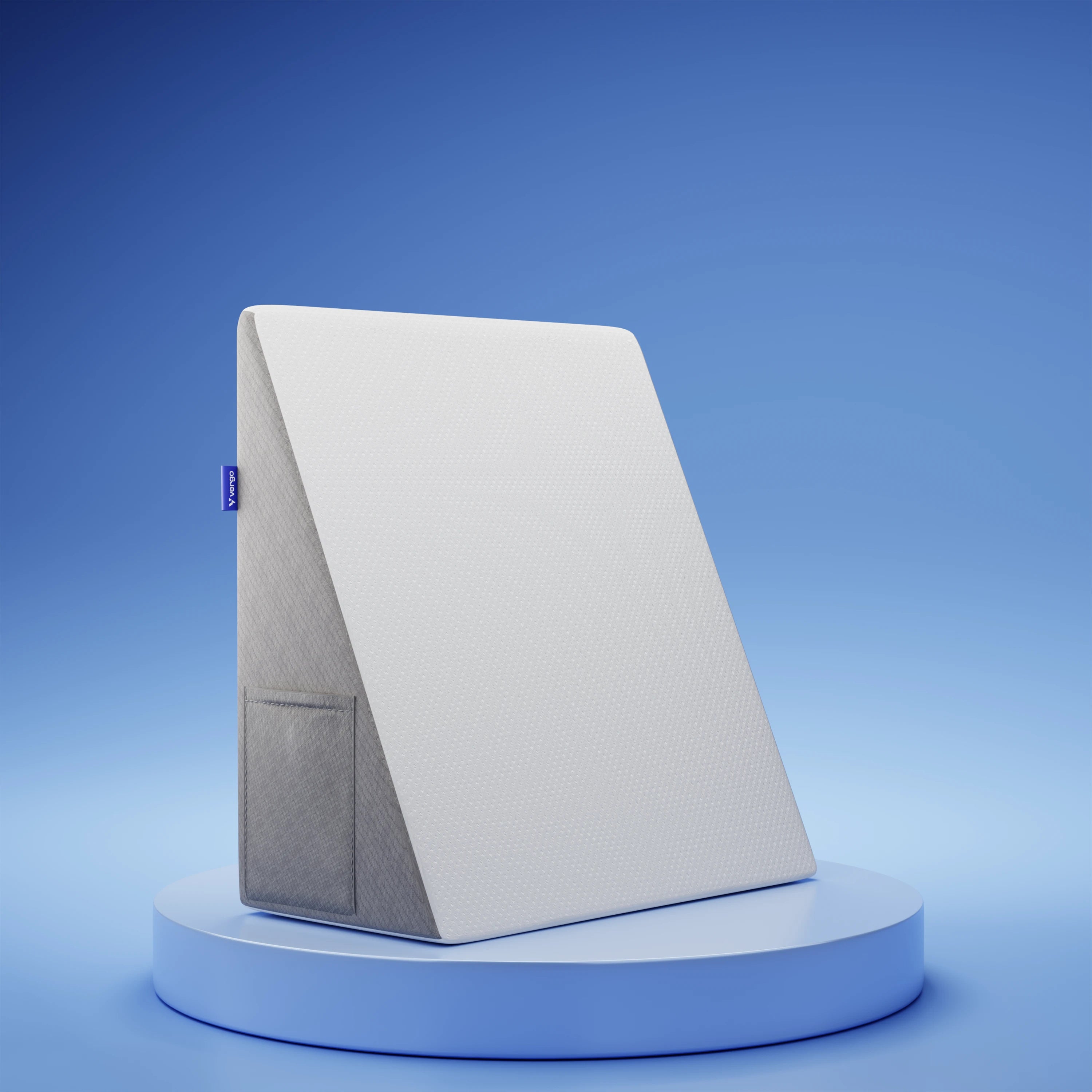
That's where a wedge pillow comes in. Unlike a traditional flat pillow, a wedge pillow has a gradual inclined shape that helps position part of the body at an elevated angle. Depending on its size and design, it can be used under the upper body, back, legs, or other areas when sitting or resting.
This simple design makes wedge pillows surprisingly versatile. They can be used while reading in bed, relaxing, elevating the legs, supporting the back, or creating a more inclined sleeping position.
One of the most researched uses of a foam wedge is elevating the upper body during sleep for people who experience nighttime reflux symptoms. The National Institute of Diabetes and Digestive and Kidney Diseases (NIDDK) notes that elevating the head and upper body with a foam wedge can be part of lifestyle management for GERD.
Research has also examined head-of-bed elevation for nighttime reflux. An evidence-based consensus found that elevating the head of the bed may reduce reflux-like symptoms and esophageal acid exposure, although the strength of evidence varies. But a wedge pillow isn't only about sleep. Its angled surface can make everyday activities such as reading, resting, or elevating the legs more comfortable. So, what exactly is a wedge pillow, how does it work, and which type is right for you? Let's break it down.
What Is a Wedge Pillow?
A wedge pillow is an inclined pillow with a triangular or sloped shape. One end is higher than the other, creating a gradual angle rather than the flat surface of a conventional pillow. The design allows you to position different parts of your body at an elevated angle depending on where the wedge is placed.
For example:
-
Under the upper back → creates a more elevated resting position
-
Under the legs → supports leg elevation
-
Behind the back → provides an inclined sitting position
-
On the bed → can make reading or relaxing more comfortable
Most wedge pillows are made from foam, with high-density or memory foam commonly used to provide structure and cushioning.
The right wedge pillow should maintain its shape under your body weight without feeling excessively hard or collapsing too easily.
How Does a Wedge Pillow Work?
The main purpose of a wedge pillow is positioning.
Instead of supporting the body from a single point like a conventional pillow, its sloped surface gradually elevates a larger area. For example, when placed beneath the upper body, a wedge can elevate the torso rather than simply lifting the head. This distinction is important when using a wedge for nighttime reflux.
The American College of Gastroenterology recommends elevating the head of the bed by around 6–10 inches for people experiencing nighttime reflux and specifically notes that an under-mattress foam wedge can be used.
Mayo Clinic similarly recommends elevating the upper body for people who regularly experience nighttime heartburn and notes that a wedge can elevate the body from the waist or upper body rather than simply raising the head with additional pillows.
Why the angle matters - A gradual incline can:
-
Change your resting position
-
Support the upper body
-
Elevate the legs
-
Create a more comfortable reading position
-
Provide an alternative to stacking multiple pillows
However, the ideal angle depends on how the wedge is being used. A wedge designed for upper-body elevation may not be suitable for leg elevation, so shape, height, firmness and size matter.
Benefits of Using a Wedge Pillow
A wedge pillow can serve several purposes around the home. Its benefits largely come from its ability to provide stable, gradual elevation.
1. Upper-Body and Back Support - When placed behind the upper body, a wedge pillow can create a naturally inclined position for resting, reading or relaxing. Instead of sitting completely upright or lying completely flat, the incline creates a middle position that some people find more comfortable.
For people who experience occasional nighttime reflux symptoms, upper-body elevation is also a recognised lifestyle measure. NIDDK recommends elevating the head during sleep by using a foam wedge or other suitable method.
Important: A wedge pillow should not be presented as a cure for back pain or a medical condition. If you have persistent or severe pain, speak with a healthcare professional.
2. Leg Elevation - A wedge pillow can also be placed under the legs to create an elevated resting position. Leg elevation is commonly used as a simple comfort measure, particularly after spending a long time standing or sitting. The NHS recommends raising swollen legs or affected areas on a chair or pillows when possible, while Cleveland Clinic also notes that elevating affected legs can help fluid drain in cases of edema.
However, unexplained, sudden, painful or severe swelling should not simply be treated with a pillow. It can sometimes indicate an underlying medical problem and should be assessed appropriately.
3. Reading in Bed - A wedge pillow can turn a flat bed into a more comfortable reading or lounging position. Instead of stacking several ordinary pillows behind your back, a properly sized wedge provides a continuous inclined surface.
This can be particularly useful for:
-
Reading books
-
Using a tablet
-
Watching television
-
Browsing on your phone
-
Relaxing before bedtime
For this purpose, look for a wedge with enough width and a supportive foam structure so that your back doesn't slide down easily.
4. Sitting and Lounging Comfort - A wedge pillow can also be used to create a more relaxed sitting position on a bed or other suitable surface.
The incline can provide additional support when you want to sit partially reclined rather than completely upright.
This makes a wedge useful for:
-
Relaxing
-
Watching TV
-
Reading
-
Resting
-
Casual lounging
The key is to choose a wedge that matches the surface and activity. A very high wedge designed for upper-body elevation may not be the most comfortable option for everyday sitting.
5. Relaxation and Rest - Sometimes comfort simply means finding a position that feels right. A wedge pillow can provide an inclined resting position that may feel more comfortable than lying completely flat, particularly when you're reading, watching television or taking a break.
Its structured shape also provides more consistent positioning than repeatedly adjusting several soft pillows.
Different Types of Wedge Pillows
Not every wedge pillow is designed for the same purpose. Before buying one, consider how you actually plan to use it.
1. Upper-Body Wedge Pillow - These wedges are generally taller and designed to elevate the torso and upper body.
Common uses:
-
Sleeping
-
Reading in bed
-
Resting
-
Upper-body elevation
These are particularly relevant when looking for a wedge pillow for acid reflux, as medical guidance commonly discusses upper-body or head-of-bed elevation for nighttime reflux symptoms.
2. Leg Elevation Wedge - These are designed specifically to support the legs and feet.
Look for:
-
Stable foam construction
-
Comfortable surface
-
Appropriate height
-
Sufficient width
-
Non-slip design where appropriate
3. Back Support Wedge - A lower-profile wedge can be used to create an inclined seating position.
These are useful for:
-
Reading
-
Watching TV
-
Relaxing
-
Sitting on the bed
4. Multi-Purpose Wedge Pillow - Some wedge pillows are designed to serve several purposes and can be repositioned depending on your needs.
If you're looking for a versatile wedge pillow for home use, this type can be a practical choice because you aren't limited to one positioning application.
Where Can You Use a Wedge Pillow?
One of the biggest advantages of a wedge pillow is its versatility.
| Where |
Common Use |
| Bed |
Upper-body elevation, reading and resting |
|
Bedroom |
Sleeping position and relaxation |
|
Living Room |
Lounging and inclined sitting |
|
Reading Space |
Back support while reading |
|
Resting Area |
Relaxation and comfortable positioning |
|
Leg Support |
Elevating legs and feet |
Remember that the correct placement depends on the wedge's design. A pillow intended for upper-body elevation shouldn't automatically be used for every application.
Who Should Consider Using a Wedge Pillow?
A wedge pillow may be useful for people who want additional positioning support during rest or relaxation.
It can be particularly useful for:
1. People Who Enjoy Reading in Bed - The inclined shape can create a more comfortable position than sitting completely upright.
2. People Looking for Leg Elevation - A suitable wedge can support the legs in an elevated resting position.
3. People Experiencing Nighttime Reflux Symptoms - Upper-body elevation is included in clinical guidance for managing nighttime GERD symptoms. NIDDK and ACG both discuss using a foam wedge or raising the head of the bed.
A 2026 randomized trial also found that adding a wedge pillow was not inferior to adding an evening PPI for nocturnal reflux symptoms in the specific study population, although this was a small trial of 24 participants and does not mean a wedge pillow should replace prescribed treatment.
4. People Who Want an Inclined Resting Position - A wedge can provide an alternative to lying completely flat when relaxing, reading or watching television.
However, people with medical conditions, recent surgery, significant swelling, pregnancy-related concerns, breathing problems or persistent pain should ask their healthcare professional whether a wedge pillow is appropriate for them.
How to Choose the Right Wedge Pillow
Before buying a wedge pillow, look beyond its appearance.
1. Consider the Intended Use -
First decide what you need it for:
Sleeping → Look for an upper-body wedge.
Leg elevation → Choose a wedge designed to support the legs.
Reading → Consider a comfortable, moderately inclined back-support wedge.
Multiple uses → Look for a versatile design.
2. Check the Height and Angle
The height of the wedge affects the degree of elevation. A taller wedge creates a steeper incline, while a lower wedge provides a gentler slope.
Don't assume that a higher wedge is automatically better. The appropriate angle depends on the intended use and your personal comfort.
3. Look at Foam Quality
A quality wedge pillow should provide enough firmness to maintain its shape while still offering comfortable cushioning.
Consider:
-
Foam density
-
Structural support
-
Shape retention
-
Compression resistance
4. Check the Cover
A removable, washable cover is a practical feature, especially if the wedge will be used regularly.
Look for:
-
Breathable fabric
-
Removable cover
-
Washable material
-
Durable stitching
-
Soft surface
5. Consider Size
Make sure the wedge is large enough for the intended body area and fits comfortably on your bed or resting surface.
6. Look for a Stable Base
A non-slip or stable bottom can help prevent unwanted movement during use, particularly on smooth surfaces.
Common Mistakes to Avoid When Buying a Wedge Pillow
1. Choosing Based Only on Price - A cheaper pillow isn't necessarily better value if it loses its shape quickly or doesn't provide the support you need.
2. Buying the Wrong Height - A very steep wedge may feel uncomfortable for some uses. Choose the height based on how you plan to use it.
3. Using One Wedge for Every Purpose - An upper-body wedge and leg-elevation wedge may have very different designs. Check the manufacturer's intended use.
4. Ignoring Foam Quality - The shape and firmness of the foam determine how consistently the wedge supports your body.
5. Forgetting the Cover - If you're using the pillow regularly, a removable and washable cover can make maintenance much easier.
6. Assuming a Wedge Pillow Treats a Medical Condition - A wedge pillow can support positioning and comfort, but it should not be considered a substitute for medical diagnosis or treatment.
Final Thoughts
A wedge pillow is a simple product, but its inclined design makes it useful in several parts of everyday life. From reading in bed and relaxing to upper-body positioning and leg elevation, the right wedge can make resting positions more comfortable and adaptable.
If you're considering a wedge pillow, start with how you intend to use it. Look at the height, angle, foam quality, size, cover and stability rather than choosing purely by appearance or price.
For people experiencing nighttime reflux, upper-body elevation is supported by clinical guidance, but a wedge pillow should be viewed as a positioning aid—not a replacement for professional medical advice or prescribed treatment.
Ultimately, the best wedge pillow is one that provides the right level of elevation, stable support and everyday comfort for your specific use.
Find the Right Wedge Pillow for Everyday Comfort - Looking for a simple way to add comfortable elevation while resting, reading or relaxing?
Explore Vergo's Wedge Pillow, designed with supportive foam construction and a practical inclined shape for versatile everyday use.
FAQ -
1. What are the benefits of using a wedge pillow?
A wedge pillow can provide comfortable elevation for the upper body or legs and can be useful for reading, resting, relaxing, and creating an inclined sleeping position.
2. What is a wedge pillow used for?
A wedge pillow can be used for upper-body elevation, leg elevation, reading in bed, sitting support, and relaxation. Its use depends on the pillow's shape, height, and design.
3. Is a wedge pillow good for sleeping?
Yes, a wedge pillow can help create an elevated sleeping position. Upper-body elevation is also recommended as a lifestyle measure for some people experiencing nighttime acid reflux symptoms.
4. Can a wedge pillow help with acid reflux?
Elevating the upper body with a foam wedge may help reduce nighttime reflux symptoms. However, a wedge pillow is a positioning aid and should not replace medical treatment or professional advice.
5. Who should use a wedge pillow?
Wedge pillows can be useful for people looking for comfortable elevation while sleeping, reading, resting, relaxing, or elevating their legs. People with specific medical conditions should consult a healthcare professional before using one for therapeutic purposes.